Last updated October 30, 2026
 House lockouts
 Re-keying
 Deadbolt upgrades
 Smart locks
 Schlage
 Kwikset
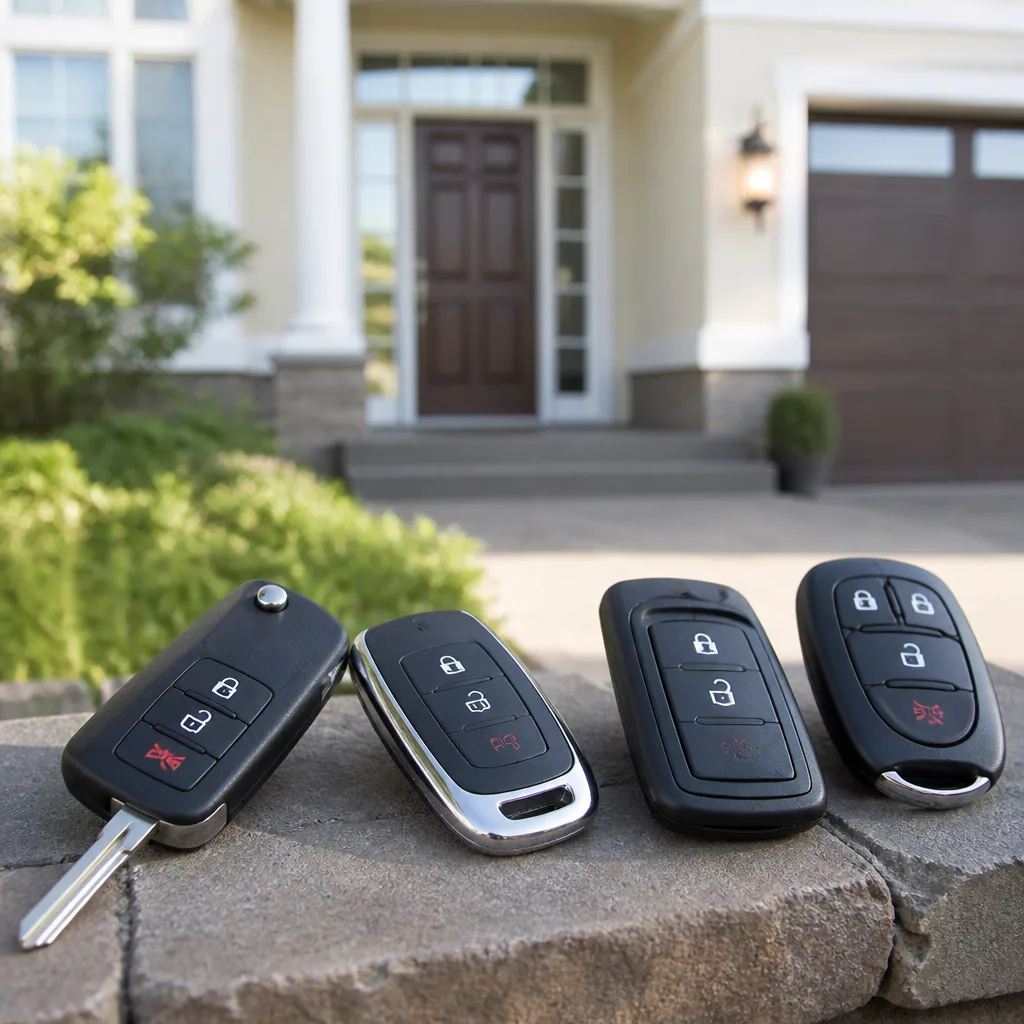 Car keys & fobs
Non-destructive entry first, always - and we re-key Schlage, Kwikset, and Baldwin locks on the spot while you watch
You get a price before we start. It does not change when we arrive. No surprises.
Get your free estimateThe Complete Car Key Replacement Guide for Glendale Homeowners
Most Glendale drivers don’t realize that a “lost car key” is not one problem. It’s a branching decision tree that splits into at least six distinct replacement scenarios the moment a locksmith asks what year, make, and trim the car is. Answering that question wrong is what turns a $150 job into a $400 one. This guide walks you through every branch of that tree: the four key categories, the ECU relearn requirement that catches people off guard, the dealer-versus-locksmith split, and the pre-call checklist that saves you time and money in Glendale. For professional help, see our Car Key Replacement services.
Quick Answer
Car key replacement cost in Glendale depends on your key type: a basic metal key runs $10-$50, a transponder key runs $90-$200, a laser-cut high-security key runs $160-$300, and a smart proximity fob runs $220-$500 including programming. Most replacements are handled same-day by a mobile locksmith, but certain push-start systems from 2022 and newer require a dealer visit. Always have your VIN, proof of ownership, and the vehicle itself present before calling for programming.
Styles & brands we work with
Table of Contents
- The Four Key Types: Know Which One You Have
- Which Glendale Vehicles Fall Into Each Category
- The ECU Relearn Requirement: Why Losing Your Second Key Costs More
- Locksmith vs. Dealer: When Each One Makes Sense
- Glendale Wait Times: The Real Dealer Backlog Problem
- Pre-Call Checklist: What to Have Ready Before You Call
- Common Mistakes to Avoid
- When to Call a Professional
- Frequently Asked Questions
The Four Key Types: Know Which One You Have
Every car key in Glendale falls into one of four categories. The category determines the cost, the equipment required, and whether the job can be done in your driveway. Understanding this split before you call any locksmith or dealership saves you from overpaying or sitting through a sales pitch for a service you don’t need.
1. Basic Cut Keys (Mechanical Only)
These are pure metal keys with no electronic component. They fit older vehicles, roughly pre-1996 for most makes. A locksmith cuts them on a mechanical duplicator in about five minutes. If this is what your car uses, replacement is cheap and fast.
Cost range in Glendale: $10-$50 including the key blank and cutting.
Examples: A 1994 Toyota pickup, an early-90s Honda Civic, a 1988 Ford F-150.
2. Transponder Keys (Chipped)
Starting in the mid-1990s, manufacturers embedded a small radio-frequency chip in the key head. The car’s ECU (engine control unit) will not start the engine unless it detects the correct chip signal. The key still has a physical cut, but the chip does the actual anti-theft work. Programming a new transponder requires a diagnostic tool that talks to the vehicle’s computer.
Cost range in Glendale: $90-$200 including blank, cut, and programming.
Examples: Most Toyotas from 1998 to 2015, Hondas from 1998 to 2012, Hyundais from 2000 to 2015.
3. Laser-Cut Keys (High-Security / Sidewinder)
These keys have a thicker shank and a cut pattern milled into the sides rather than the edges. They’re harder to duplicate and require a laser cutting machine. Most laser-cut keys also contain a transponder chip, which means you’re paying for both the precision cut and the programming.
Cost range in Glendale: $160-$300 including blank, laser cut, and programming.
Examples: Many Toyotas from 2016 onward, Hondas from 2013 onward, most newer Hyundais, and virtually all BMWs from the early 2000s forward.
4. Smart Proximity Fobs (Push-Start, Keyless Entry)
These do not need to be inserted into an ignition at all. The fob communicates with the vehicle wirelessly, and the car starts with a push button. Replacing a smart fob requires both programming the fob itself and registering it with the vehicle’s security module. This is the most expensive and most dealer-constrained category.
Cost range in Glendale: $220-$500 including fob, programming, and emergency key extraction if applicable.
Examples: Toyota Prius (most years), Honda Accord push-start trims, Hyundai Tucson and Santa Fe push-start models, BMW 3 Series and X3 from 2011 onward.
Which Glendale Vehicles Fall Into Each Category
Glendale’s streets are heavy with Toyotas, Hondas, Hyundais, and BMWs. Here’s how those common makes distribute across the four categories, so you know exactly what you’re dealing with before you even open your door.
- Toyota: Pre-1998 models take basic cut keys. 1998-2015 Camry, Corolla, and RAV4 take transponder keys. 2016 and newer Corolla, Camry, and Tacoma take laser-cut keys. Prius models and any push-start trim take smart fobs.
- Honda: Pre-1998 models take basic cut keys. 1998-2012 Civic and Accord take transponder keys. 2013 and newer Civics and Accords take laser-cut or smart fob depending on trim. CR-V push-start trims take smart fobs.
- Hyundai: Pre-2000 models take basic cut keys. 2000-2015 Sonata and Elantra take transponder keys. 2016 and newer take laser-cut keys. Santa Fe and Tucson push-start trims take smart fobs, and we’ve seen several 2022 and newer Hyundai push-start systems that lock out aftermarket programming tools entirely.
- BMW: Most 2002 and newer 3 Series, 5 Series, and X3 models take laser-cut keys or smart fobs. BMW keys are tightly integrated with the vehicle’s CAS (Car Access System) module, which means more programming steps and higher cost than a comparable Toyota or Honda.
If you don’t know your key type, check whether the key has a thick plastic head (transponder), a milled groove down the side (laser-cut), or no metal blade at all (smart fob). That single visual check narrows your cost range immediately.
The ECU Relearn Requirement: Why Losing Your Second Key Costs More
Here’s the part of car key replacement that most Glendale drivers don’t see coming. When you program a new transponder or smart key, the vehicle’s ECU does not simply add the key to a list. On many makes and models, it performs a relearn procedure that wipes all previously registered keys from memory and re-registers only the keys present during programming.
This means one thing: if you lost your only key and have no spare, the programming session registers the new key only. But if you have a spare at home and want to add a second, all keys must be in the vehicle during programming, or the spare will stop working. A “second lost key” situation, then, is genuinely more expensive. Here’s why.
On your first lost key, a locksmith or dealer programs the new key and the vehicle’s ECU now recognizes exactly one key. If you lose that replacement later, the vehicle has zero recognized keys. The locksmith must perform what’s called an “all keys lost” procedure, which requires a deeper-level security access than simple adding-a-spare programming. Some vehicles even require a synchronization step that reads data from the body control module or the ignition immobilizer directly.
What this means in Glendale: if you have one working key, hold onto it. The moment you have one functioning replacement, seriously consider spending the money to create a second as a backup while the first is still working. Adding a spare when you have a working key costs less than starting from zero. This is a completely avoidable financial hit that we see play out in driveways from Adams Hill to Montrose every month.
The All-Keys-Lost Cost Difference
- Spare key added while one key still works: $90-$220 depending on key type. Simple add-key programming.
- All keys lost, zero keys present: $140-$300 depending on key type. Requires full security access, and on some vehicles a 10-30 minute immobilizer sync.
The difference isn’t dramatic on a single replacement, but it compounds if you’ve already paid for one lost-key job and now pay for another. A spare made today costs less than an emergency replacement next year.
Locksmith vs. Dealer: When Each One Makes Sense
This is the branch of the decision tree that most directly affects your wallet. A qualified automotive locksmith in Glendale handles the large majority of key replacements on-site, using mobile programming equipment that plugs into your vehicle’s OBD-II port. A dealership always can do the job, but charges more and takes longer. See DIY vs Professional Locksmith: The Glendale Homeowner’s Decision Guide for a deeper look at this split.
When a locksmith is the right call:
- Basic cut keys for any pre-1996 vehicle.
- Transponder keys with an existing working key present.
- Laser-cut keys for Toyota, Honda, Hyundai, and most domestic makes.
- Smart fob replacement for many Toyota and Honda push-start systems.
- All keys lost procedures for the majority of vehicles that are not the newest security generation.
- When you need the job done today and don’t want to wait for a dealer appointment.
When a dealer visit is unavoidable:
- Certain 2022 and newer Hyundai and Kia push-start systems that lock out aftermarket programming tools. We’ve encountered specific Tucson and Santa Fe trims in Glendale where the vehicle’s security module rejects any programmer that isn’t dealer-authenticated at the factory level.
- Some BMW models with encrypted key data that only BMW’s online server can generate. This is less common than it was five years ago, but it still happens with newer 5 Series and X5 models.
- Vehicles where the body control module or immobilizer itself has failed, and the repair involves warranty-covered work. A locksmith can diagnose a failed module, but the replacement belongs at a dealer.
The practical takeaway: if you drive a Toyota or Honda, a locksmith can almost always handle your replacement. If you drive a 2022 or newer Hyundai with push-start, call a locksmith first for an honest assessment, but expect a possible dealer referral.
Glendale Wait Times: The Real Dealer Backlog Problem
Dealer service departments across the LA area are backed up. In Glendale and the surrounding San Fernando Valley, it’s common to wait 5-10 business days for a key programming appointment at a dealership. The bottleneck is not the key cutting or even the programming itself. It’s the service bay scheduling. A key replacement gets slotted into the same queue as oil changes, brake jobs, and warranty work.
A mobile locksmith programs the key in your driveway or at your workplace in Glendale, typically in under an hour from arrival. There’s no service bay, no appointment backlog, and no tow truck needed. If your car is sitting in a Brand Boulevard parking garage or a Chevy Chase Canyon driveway, that difference is not theoretical. It’s the gap between walking out of your house tomorrow morning and waiting until next week.
For a Glendale home with two working adults and two cars, losing a key should not mean losing a car for a week. The mobile option exists specifically to prevent that outcome.
Pre-Call Checklist: What to Have Ready Before You Call
Every minute you spend gathering the right information before you call a locksmith is a minute saved on dispatch and programming. Here’s the exact checklist we walk our Glendale callers through.
- Have the vehicle present. Not just the VIN. Programming requires physical access to the OBD-II port and the vehicle’s security modules. A VIN alone lets a locksmith cut a metal key, but it does not allow programming. If your car is at home in Glendale, the locksmith comes to it. If it’s in a lot, the locksmith meets you there.
- Locate the VIN. It’s on a metal plate visible through the driver’s side of the windshield at the dash, on the driver’s side door jamb sticker, and on the vehicle registration and insurance card. Write it down or photograph it before calling.
- Have proof of ownership ready. Vehicle registration in your name, title, or a recent insurance card matching the VIN. This is not optional. No legitimate locksmith will program a key for a vehicle without verifying ownership.
- Know your key type. Use the categories in the section above. Metal-only, plastic head, side-milled, or no blade at all. That single detail narrows the price quote on the phone.
- Have your backup key present if you have one. As covered in the ECU relearn section, all keys must be present during programming on most vehicles, or they’ll be wiped from the vehicle’s memory.
- Know your exact year and trim. A 2018 Honda Accord LX and a 2018 Honda Accord Touring use different keys. Trim level matters. If you don’t know it, check the badge on the trunk or the paperwork in the glovebox.
If you do all six things before calling, the phone call takes three minutes, the quote is accurate, and the locksmith arrives ready to program.
Common Mistakes to Avoid
Every one of these mistakes has shown up in a Glendale driveway or parking structure at least once. Here’s what not to do.
- Calling a dealer first without checking if a locksmith can handle it. Dealers are not wrong; they’re just expensive and slow. A phone call to a car key replacement service in Glendale costs you nothing and tells you if the job is dealer-only or not. Most Toyota, Honda, and older Hyundai replacements are not dealer-only.
- Assuming the cheapest online key blank will work. Aftermarket blanks are not all the same. A $5 blank from an auction site may not hold programming, may be made of softer metal that wears the ignition cylinder faster, and may be rejected by the vehicle’s immobilizer system entirely. Use a blank from a supplier that matches OEM specifications.
- Replacing a lost key without making a backup spare. When you have one working key, the next lost key starts from zero. The cost difference is real. Make the spare the same day, not “someday later.”
- Programming one key when you intend to add more later. The ECU relearn wipes un-programmed keys. If you think you’ll want a third key, program all of them in the same session. Doing it twice means paying for programming twice.
- Not having the vehicle at the same location as the key call. You’d be surprised how often someone calls from work in Glendale while the car is at home in La Crescenta. The locksmith needs the car. Have both in one place.
- Skipping proof-of-ownership verification. If a locksmith offers to make a key for a vehicle you don’t own without checking your documents, you should be suspicious of them. The verification protects you and your neighbors in Glendale.
- Leaving a spare key inside the vehicle while getting a replacement. It sounds obvious, but a spare key sitting in the console during an all-keys-lost programming will interfere with the relearn. Check the car before the locksmith arrives.
When to Call a Professional
If your key has a chip, a milled side pattern, or no metal blade at all, do not attempt a home or hardware-store replacement. Hardware stores can cut basic metal keys but cannot program transponders, cannot cut side-milled laser keys, and cannot register smart fobs. If your car is 1996 or newer, you are almost certainly dealing with a chipped key that requires professional programming equipment. If you lost your only key, you need a locksmith or dealer. If your ignition cylinder feels loose or the key turns but the car won’t start, the problem may be the cylinder itself, not the key. All of these are professional jobs. Glendale Lock & Key offers free estimates in Glendale. Call (855) 791-2710 for a quote before you spend a dollar anywhere else.
Frequently Asked Questions
Car key replacement in Glendale costs between $10 and $500 depending on key type: basic metal keys run $10-$50, transponder keys $90-$200, laser-cut keys $160-$300, and smart fobs $220-$500 including programming. The exact quote depends on your vehicle’s year, make, and trim. Call (855) 791-2710 for an exact quote. The price quoted on the phone is the price on the invoice, with no call-out surcharge added on arrival.
Yes, a locksmith can make a car key from zero keys on the majority of vehicles, including all-key-lost programming for most Toyotas, Hondas, and Hyundais. This requires the vehicle to be present and proof of ownership in your name. Some 2022 and newer push-start Hyundais and Kias require dealer-only programming and cannot be done by an independent locksmith.
Yes, we program transponder keys, laser-cut keys, and smart proximity fobs for most Toyota, Honda, Hyundai, and BMW models. We carry programming equipment that connects to your vehicle’s OBD-II port on-site in Glendale. We also work on the full range of residential and commercial lock hardware, from Kwikset and Schlage entry locks through Medeco and Abloy high-security cylinders, as covered on the Glendale Lock & Key home page.
Most basic and transponder key replacements in Glendale are completed in 30-60 minutes from arrival. Laser-cut keys take 45-90 minutes depending on the blank availability. Smart fob programming for common Toyota and Honda models takes 45-75 minutes. The time to arrival depends on dispatch and your location within Glendale, but same-day service is available for most calls. For urgent lockouts as well, our emergency locksmith service in Glendale is available when it can’t wait.
No. A mobile automotive locksmith comes to the vehicle, whether it’s at your Glendale home, in a parking lot, or at your workplace. The vehicle does not move during the service. This is the single biggest time-savings advantage over a dealer appointment, where the car typically sits in a queue for days before being programmed.
Yes. Because we handle both automotive and residential locksmith work, you can have a lock rekeying service for your Glendale home scheduled in the same visit as your car key replacement. From the ignition to the deadbolt, the same technician carries the equipment for both.
The Bottom Line
Car key replacement in Glendale is a solvable problem, but only when you understand which branch of the decision tree you’re standing on. Know your key type. Know your vehicle’s year and trim. Have your VIN and proof of ownership ready. If you have one working key, make a backup now while adding a spare is cheap. And before you commit to a dealer appointment with a 5-10 day wait, call a mobile locksmith and find out if the job can be done in your driveway today. Most of the time, in Glendale, it can.
Written by the team at Glendale Lock & Key, serving Glendale since 2018.