Last updated October 30, 2026
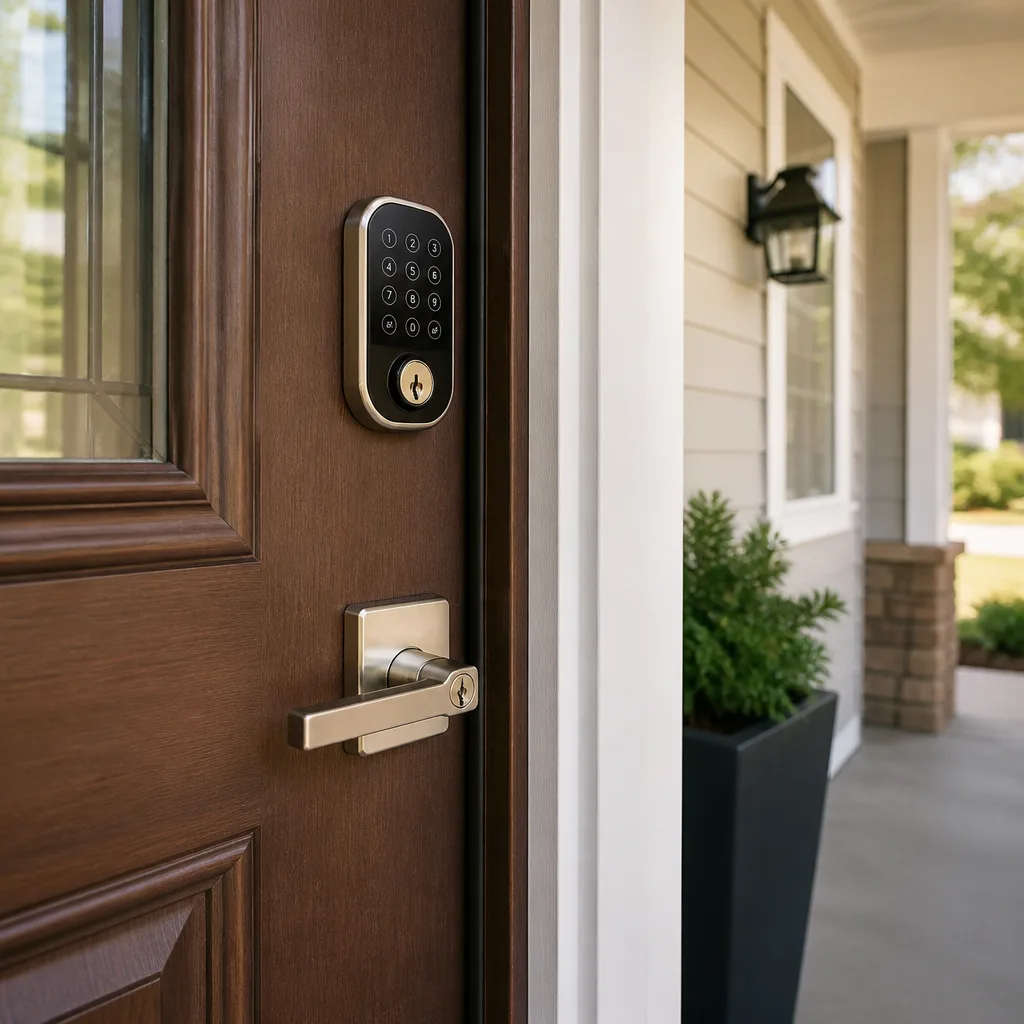 Smart locks
 House lockouts
 Re-keying
 Deadbolt upgrades
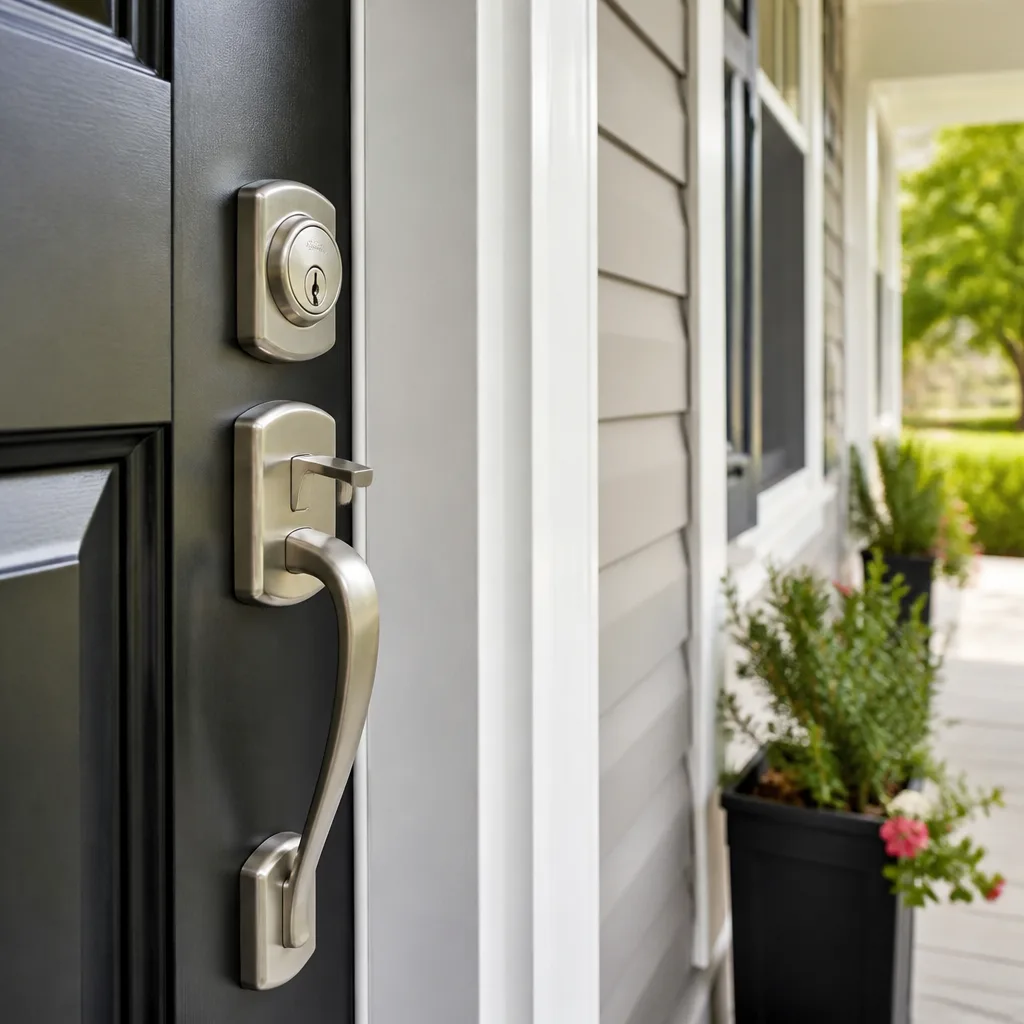
 Schlage
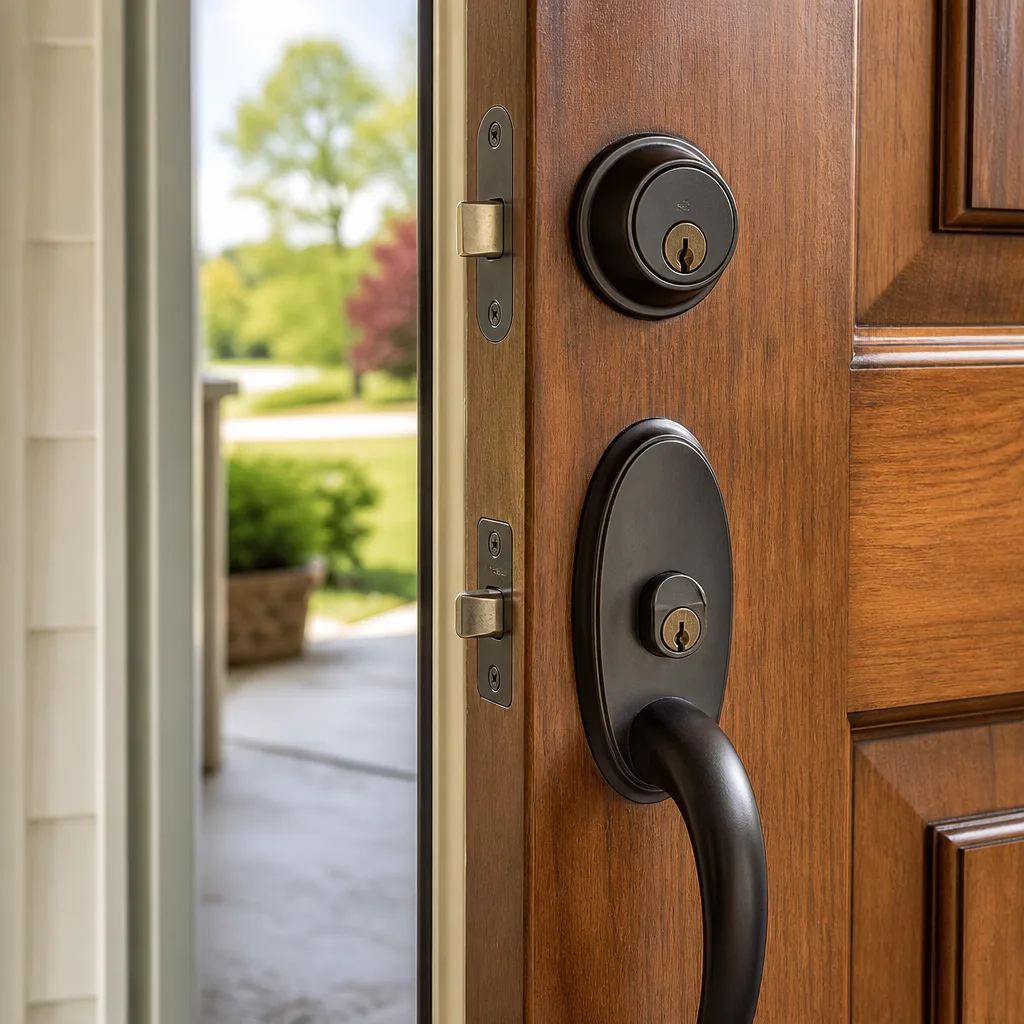
 Kwikset
 Car keys & fobs
Non-destructive entry first, always - and we re-key Schlage, Kwikset, and Baldwin locks on the spot while you watch
You get a price before we start. It does not change when we arrive. No surprises.
Get your free estimateHow to Hire a Locksmith Contractor in Glendale: A Step-by-Step Guide
Searching “locksmith near me” in Glendale returns a mix of BSIS-licensed professionals, unlicensed handymen, and lead-generation middlemen who subcontract to whoever is available, and the invoice often looks identical across all three. The difference shows up later: stripped screws, a drilled cylinder that should have been picked, a “rekey” that left three old keys still in circulation. This guide gives you a concrete hiring framework built around the questions most homeowners never think to ask, from verifying a license in real time to reading a quote line by line before the first tool comes out. By the end, you’ll know exactly how to separate a trained locksmith from a dispatch service with a website.
Quick Answer
To hire a locksmith in Glendale, verify their BSIS license number on the California Bureau of Security and Investigative Services website before they arrive, ask specifically which hardware brands they carry and install, and get a written quote that separates the service call, labor, and hardware line items before any work begins. For a detailed look at what to expect, see our Locksmith Cost Breakdown: The Glendale Homeowner’s Reference for 2026. A legitimate Glendale locksmith will answer questions about Schlage, Kwikset, Medeco, or Mul-T-Lock cylinders without hesitation, provide a physical business address in the area, and quote the full price on the phone before dispatch. Avoid any contractor who refuses a written estimate, quotes a suspiciously low “starting” price, or won’t confirm their license number when asked.
Styles & brands we work with
Table of Contents
- Step 1: Verify the BSIS License Before Anything Else
- Step 2: Ask About Hardware Brand Competency
- Step 3: Describe Your Existing Hardware Accurately
- Step 4: Read the Quote Line by Line
- Step 5: Spot the Red Flags Specific to Glendale
- Step 6: Choose Rekeying vs. Replacement with a Clear Head
- Step 7: Verify the Technician at the Door
- Common Mistakes to Avoid
Step 1: Verify the BSIS License Before Anything Else
Every locksmith operating legally in California must hold a locksmith company license issued by the Bureau of Security and Investigative Services, and every employee who works under that license must carry a BSIS-issued registration card. This is not optional. For details on the regulatory framework, read our guide to Locksmith Permits, Codes & Inspections in CA: What You Need to Know. It’s the first filter that separates a professional from a guy with a drill and a Craigslist ad. In Glendale, where the housing stock ranges from 1920s Spanish Revival bungalows with original mortise locks to newer condo developments with multi-point locking systems, the stakes for getting this wrong are real: an unlicensed operator has no accountability when a cylinder is damaged or a door frame is gouged.
Here’s how to verify a license before the locksmith gets near your property:
- Ask for the company’s BSIS license number on the phone. A legitimate Glendale locksmith will give it to you without hesitation. If they stall, deflect, or say they “don’t have it handy,” end the call.
- Go to the BSIS license lookup page (search “BSIS license verification” and use the official .ca.gov site). Enter the company name or license number.
- Confirm the license status is “Current” or “Active.” Expired, suspended, or revoked licenses are a hard stop.
- Check the business address listed on the license. If it’s a P.O. box in Sacramento or an address that doesn’t match where they say they operate, that’s a dispatch service, not a local contractor.
- Ask for the technician’s individual registration card number. When they arrive, the card should match the name on their ID and the company they say they work for.
We have seen Glendale residents hand over $400 to a locksmith who arrived in an unmarked van, drilled out a perfectly good Kwikset deadbolt, and left no receipt with any identifying information. The lock worked, sort of, but the door frame was scarred and there was no recourse. A two-minute license check would have prevented the entire interaction.
A BSIS license doesn’t guarantee perfect work, but it guarantees that someone is accountable. Accountability changes how a contractor behaves when a job goes sideways.
Step 2: Ask About Hardware Brand Competency
The most revealing question you can ask a locksmith is not “how much do you charge?” but “what hardware brands do you stock and service?” The answer tells you more about their actual skill level than any review aggregate ever will. A locksmith who hesitates at that question, or who says “we work on all locks,” is telling you they’re a generalist who learns on your door.
Here’s why brand fluency matters. Schlage and Kwikset cylinders are the entry point. Most residential locksmiths learn on these because they’re ubiquitous in tract housing and apartment complexes. Yale and Baldwin represent the upper-mid tier, with tighter tolerances and more varied tailpiece configurations. Medeco, Mul-T-Lock, Abloy, and Sargent are a different conversation entirely. These are high-security cylinders with restricted keyways, angled cuts, and patent-protected key blanks. A locksmith who has never touched an Abloy disc-detainer cylinder or a Medeco M3 has no business quoting high-security work, and even rekeying one requires specialized pins and followers.
Ask these specific questions:
- “Do you carry Medeco or Mul-T-Lock key blanks and pins?” If the answer is no, they’re a consumer-grade shop, which matters if you’re considering a real security upgrade.
- “Can you rekey a Schlage B60 deadbolt to match my existing Kwikset knobs?” This tests their understanding of cross-brand compatibility and keyway differences.
- “What’s your process for installing a Baldwin mortise lock on an older door?” Mortise retrofits are not the same as bored cylindrical installs. The question separates experienced hands from parts-swappers.
At Glendale Lock & Key, we work across Schlage, Kwikset, Medeco, Yale, Baldwin, Mul-T-Lock, Sargent, and Abloy. That range is not a brag. It’s the difference between being able to fix what’s on your door today and being able to raise your security tier without switching contractors mid-project. When a Glendale homeowner calls about a 1940s house with a mismatched mix of Schlage and Baldwin hardware, we don’t have to refer them elsewhere. That’s the standard you should look for, whatever company you end up hiring.
Want to see what full-spectrum hardware capability looks like in practice? Start with our Glendale Lock & Key home page, which outlines the complete range of hardware we service.
Step 3: Describe Your Existing Hardware Accurately
Getting a real quote over the phone depends on how well you can describe what’s on your door. A locksmith who gives you a firm price without knowing whether you have a Kwikset entry knob or a Baldwin mortise lock is either guessing or planning to renegotiate on arrival. The more specific you are, the more honest the estimate.
Here’s a simple checklist to run through before you call:
- Find the brand name. It’s stamped on the face of the lock, the edge of the latch, or the key bow. Schlage, Kwikset, Yale, and Baldwin all mark their hardware. If you see “DEFIANT” or “Gatehouse,” that’s a big-box store brand, which changes both the parts cost and the labor approach.
- Identify the lock type. Is it a deadbolt, an entry knob or lever, a handle set, or a mortise lock? Mortise locks have a rectangular body that slides into a pocket in the door edge. Deadbolts and knobs sit in round bored holes.
- Count the cylinders. A single-cylinder deadbolt has a key on the outside and a thumb turn inside. A double-cylinder deadbolt takes a key on both sides. Double-cylinder locks affect both price and safety considerations, so mention it.
- Check the door prep. How far from the center of the knob to the center of the deadbolt (the “backset”)? Standard backsets are 2-3/8 inches or 2-3/4 inches. If your door has a non-standard measurement, the locksmith needs to know before arrival.
- Note any existing damage or oddities. A sticky deadbolt, a latch that doesn’t fully retract, a strike plate that’s been moved. These affect labor time and should be disclosed upfront.
For automotive work, the questions shift. You need your vehicle’s year, make, and model at minimum. Modern transponder keys, chip keys, and proximity fobs are programmed to the vehicle’s immobilizer system, which varies by manufacturer and model year. A 2015 Honda key is not the same job as a 2008 Toyota key, and quoting accurately requires that information upfront. Our Car Key Replacement in Glendale page covers exactly what information we need to quote automotive work before you commit to anything.
Accurate hardware description does something else, too: it signals to the locksmith that you’re paying attention. Contractors quote differently for customers who know what’s on their door.
Step 4: Read the Quote Line by Line
A locksmith’s quote structure reveals more about their business practices than any review. There are three legitimate line items you should expect to see: a service call fee, a labor charge, and hardware costs. Anything vague, bundled, or suspiciously low should trigger your skepticism.
Here’s what each line item should look like:
- Service call fee. This is the cost of dispatching a technician to your property, typically $35 to $75 in the Glendale area for non-emergency work. It covers travel and the technician’s time. The key question: is the service call fee waived or credited toward the job, or is it separate from labor? Either answer is legitimate, but it must be stated plainly. You should never discover a “dispatch fee” for the first time when the invoice appears.
- Labor charge. This is the cost of the actual work, usually quoted as a flat rate for standard jobs like a rekey or a lock installation. Expect $45 to $90 per cylinder for rekeying, or $65 to $120 for a standard deadbolt install. Labor is where bait-pricing operators hide money, quoting “$19 service calls” and then stacking hours at $120 each once they’re on site.
- Hardware. The cost of the physical lock, cylinder, pins, and key blanks. A new Schlage B60 deadbolt runs $45 to $80 at retail, and a Kwikset entry knob is $25 to $50. High-security hardware like Medeco or Mul-T-Lock cylinders runs $120 to $300 or more, which is normal and appropriate for the security tier. You should be told exactly which brand and model of hardware you’re paying for before it’s installed.
Now, here’s what a bait-pricing quote looks like:
- A “$19 service call” with no stated labor rate
- An estimate given as “it depends” with no follow-up questions about your hardware
- Hardware described only as “a new lock” with no brand, model, or grade mentioned
- A total that seems too low to be true for the work described
The single most important thing to understand about locksmith pricing in Glendale is that the full price should be quoted on the phone before anyone is dispatched. The quote you receive is the price on the invoice. There is no legitimate reason for a locksmith to arrive at your property and discover that the price has changed unless you misrepresented the job or the hardware on your door is different from what you described. If a contractor quotes you $85 over the phone and the invoice at the end of a one-hour job is $425, that’s not a misunderstanding. That’s a business model.
If you’re weighing rekeying against replacement, our Rekey Locks in Glendale page details the pricing structure and the hardware evaluation process, so you know exactly what you’re paying for before we step through the door.
Step 5: Spot the Red Flags Specific to Glendale
Glendale has a particular vulnerability to locksmith bait-pricing because of its mix of single-family homes, rental properties, and a steady stream of new residents who don’t yet have a go-to contractor. The scams are well-documented, and the patterns are easy to spot once you know what to look for. For help getting ready before you need one, see our Locksmith Emergency Preparedness Guide for Glendale Homes.
Here are the red flags we tell our Glendale customers to watch for:
- An out-of-area dispatch number. If the phone number on the ad is a paid directory listing from a call center in another state, you’re calling a lead generator, not a locksmith. They’ll answer “locksmith services,” collect your address, and subcontract the job to whoever will accept the fee. You have no idea who’s actually coming.
- No physical business address. Ask: “What’s your shop address?” A Glendale locksmith has a physical location in the area. A dispatch service has a virtual office and a website. No address means no accountability, and no reason to believe the person at your door has any connection to the name on the invoice.
- Refusal to provide a written estimate before drilling. Drilling a lock is a destructive method of entry that destroys the cylinder. A competent locksmith will almost never drill a lock as a first resort. If the technician arrives and immediately says the lock “has to be drilled” without attempting to pick it, and refuses to give you a written quote for the total job before starting, that’s a sign you’re being set up for a bill that will triple by the time they’re done.
- Generic vehicle with no labeling. Every legitimate locksmith contractor we know runs a marked vehicle or at minimum carries branded paperwork. An unmarked sedan with magnetic signs is not proof of a scam on its own, but combined with any other red flag, it’s reason to stop the job.
- Cash-only demands after work starts. A legitimate contractor accepts standard payment methods and gives a receipt. If the technician suddenly wants cash and won’t provide a written invoice, the job has gone sideways and the pricing structure is about to change.
The thing about these red flags is that they rarely appear in isolation. A contractor who won’t give you their license number will often also have no physical address and a generic vehicle. When you see two or more, stop the job before it starts. You’re not obligated to let someone work on your property just because they responded to your call.
Step 6: Choose Rekeying vs. Replacement with a Clear Head
The decision to rekey or replace a lock often gets made under pressure: you just closed on a house, an ex-partner moved out, a tenant didn’t return keys, or you lost a key and don’t know who might have found it. In that moment, the instinct is to replace everything for maximum security. That instinct is understandable, and sometimes correct. But often, rekeying is the smarter move, both financially and practically.
Rekeying means changing the internal pins and springs in the cylinder so the old key no longer operates the lock. The lock body, faceplate, and finish stay in place. The hardware you already own, which may be perfectly good, remains in service. The cost is significantly lower than a full replacement. A straightforward residential rekey in Glendale typically runs $25 to $45 per cylinder, where a new mid-grade deadbolt installed runs $85 to $150.
Replacement is the right call when the hardware itself is worn out: a loose cylinder, a wobbly knob, a strike plate that’s been moved too many times, or a finish that’s deteriorating. It’s also the right call when you want to move up in security tier, say from a standard Kwikset to a Schlage B60 or from any consumer grade lock to a restricted-keyway system like Medeco or Mul-T-Lock.
Here’s a simple decision framework:
- Rekey if: the hardware is in good condition, you just need to invalidate old keys, and you’re happy with the current brand and security level.
- Replace if: the hardware is physically compromised, you want a different finish or style, or you’re raising your security level and need better cylinders.
- Mix and match: it’s common in Glendale to rekey the existing locks on a new home purchase and add one new high-security deadbolt on the primary entry. The new deadbolt can be keyed to match the rekeyed cylinders by a locksmith who carries multiple brand systems.
One more thing. If you’re replacing locks after a break-in or after losing keys, do every exterior door. A thief who found your key in a parking lot won’t try the back door first, but they will try it eventually if the front door fails. Key control is the point of rekeying, and a partial rekey is a partial solution.
Step 7: Verify the Technician at the Door
You’ve checked the license on the phone. You’ve described your hardware accurately. You’ve agreed on a price. Now a person shows up at your door claiming to be the locksmith you spoke with. Before you let them touch anything, confirm it.
Here’s the arrival checklist:
- Ask for their BSIS registration card. Every registered locksmith employee carries it. The card should show their name, their registration number, and the name of the company they work for. If the card says a different company than the one you called, send them away.
- Check their ID against the registration card. The name on the card should match their driver’s license. If it doesn’t, you have no way to know who’s actually at your door.
- Confirm the price before work starts. Repeat the quote you got on the phone and have them agree to it. If they say anything that sounds like a change, stop and clarify before they open their tool bag.
- Verify the vehicle. If the vehicle is unmarked and the technician is evasive about which company they work for, the job is already off the rails. You can tell them to leave. You’re not being rude. You’re protecting your property.
We will say this plainly: most locksmith technicians in Glendale are honest professionals doing skilled work for fair pay. The verification process isn’t about treating everyone as a suspect. It’s about confirming that the person at your door is who they claim to be, and the two-minute check protects both of you. A legitimate contractor expects this process. A scammer resents it.
If you find yourself in a situation that can’t wait, our Emergency Locksmith in Glendale page explains how we handle urgent lockouts, including what information we confirm on the phone before dispatch and what you can expect on arrival.
Common Mistakes to Avoid
- Hiring based on the lowest phone quote. A “$19 service call” is not a price. It’s a hook. The final invoice will be five to ten times that, and the technician will explain why the job was “more complicated than expected.” You’ll pay more than you would have with an honest quote.
- Skipping the license verification. Two minutes on the BSIS website is the difference between a state-accountable contractor and a guy who disappears the moment the cash clears. In Glendale, where unlicensed handymen compete directly with licensed technicians, this step is not optional.
- Describing your lock as “just a regular lock.” There is no such thing. A Schlage deadbolt and a Kwikset knob and a Baldwin mortise are three different jobs. “Regular” tells the locksmith nothing, and it tells you nothing about the person on the other end of the phone.
- Waiting until a lockout to find a locksmith. The worst time to evaluate a contractor is at 2 a.m. when you’re standing outside your own front door. You’ll take whoever answers. Find a locksmith before you need one, even if just to have the number saved.
- Assuming all automotive key work is the same. A metal key for a 2005 sedan is a different job from a transponder key for a 2019 SUV. If you have a modern vehicle, confirm the locksmith has the programming equipment and experience for your make and model before you commit.
- Accepting “the lock had to be drilled” at face value. Drilling is a last resort for locks that are broken or jammed. A working lock that simply needs a key should never be drilled. If a technician makes this claim, ask why. If the answer doesn’t make sense, stop the job.
- Not getting a written estimate. Verbal agreements don’t survive invoice time. A written estimate with the service call fee, labor, and hardware costs itemized is the single best protection you have against surprise pricing.
When to Call a Professional
Some lock work is DIY-friendly. Changing a passage knob on an interior door is a screwdriver job. Swapping a visible deadbolt can be done by a careful homeowner with the right template and a drill. But there are points where the risk of doing it wrong outweighs the cost of hiring someone who does it every day. Any lock that involves high-tension springs, like a mortise lock with a broken internal spring, is a job for a technician with the right followers and the right patience. Automotive transponder programming requires equipment that costs more than the job itself, and a botched programming attempt can leave your vehicle immobilized. High-security cylinders like Medeco and Abloy should only ever be serviced by someone who has worked on that specific system before. When you’re looking at a rekey after a lost key, a lockout at midnight, or an upgrade to a restricted keyway, the right call is a phone call. Glendale Lock & Key offers free estimates in Glendale, call (855) 791-2710 for an exact quote before any work is scheduled.
Frequently Asked Questions
A typical locksmith job in Glendale runs $65 to $150 for a standard deadbolt installation, $25 to $45 per cylinder for rekeying, and $85 to $250 for automotive key work depending on the year, make, and model. Emergency service adds a premium for the after-hours dispatch, but the full price should be quoted on the phone before anyone is sent to your property. Call (855) 791-2710 for a free estimate on your specific job, and you’ll know the exact number before we dispatch.
Yes. The quote we give you on the phone is the price on the invoice, assuming the hardware on your door or vehicle matches what you described. We don’t add a call-out surcharge on arrival, and we don’t discover “unexpected complications” that triple the bill mid-job. If we arrive and find something different from what you described, we stop and re-quote before any work starts. The full price is always agreed to before a tool comes out.
Go to the California Bureau of Security and Investigative Services website and use their license verification tool. Enter the company name or the BSIS license number the locksmith provided. Confirm the status is current, note the business address on file, and match it against the address the locksmith gave you. Then ask the technician for their individual registration card when they arrive. The card should show their name and the company they work for.
Rekeying is usually the better financial move if the existing hardware is in good condition. You invalidate all old keys, keep the hardware you already own, and pay $25 to $45 per cylinder instead of $85 to $150 for a new deadbolt. Replacement makes sense when the hardware is worn or you want to upgrade to better cylinders. Many new Glendale homeowners rekey everything and add one high-security deadbolt on the main entry, keyed to match the rest. We can walk you through the trade-off on the phone.
Yes, but the process depends on your vehicle. Modern transponder and proximity keys need to be programmed to your car’s immobilizer system, which requires the right equipment and the right experience for your specific make and model. Some older vehicles with basic metal keys are a simpler cut-by-code job. Either way, you need your vehicle’s year, make, and model, and proof of ownership when the technician arrives. It’s a service many residential-only locksmiths don’t offer at all.
For non-emergency work like rekeying or planned hardware upgrades, we schedule at a time that works for you, usually the same day or next day. For lockouts and other urgent calls, we prioritize response time and aim to reach you as quickly as traffic allows from our Glendale location. The dispatch time is quoted on the phone when you call, not guessed at after you’ve already paid. Call (855) 791-2710 and you’ll get a straight answer on both price and arrival time.
The Bottom Line
Hiring a locksmith in Glendale comes down to three verifiable things: a current BSIS license, a demonstrated knowledge of the hardware on your property, and a written quote that separates service call, labor, and hardware costs with no surprises. Every other factor, reviews, ads, website polish, is secondary to those three. For more guides & resources, visit our blog. A contractor who can name the brand on your door, confirm their license without hesitation, and give you a straight number on the phone is worth more than any five-star aggregate. You don’t need to become a lock expert to hire one. You just need to ask the right questions and walk away from anyone who won’t answer them.
Written by the team at Glendale Lock & Key, serving Glendale since 2018.